

Thomas Perkins
-
Posts
4,211 -
Joined
-
Last visited
-
Days Won
14
7 Followers


Thomas Perkins's Achievements


-
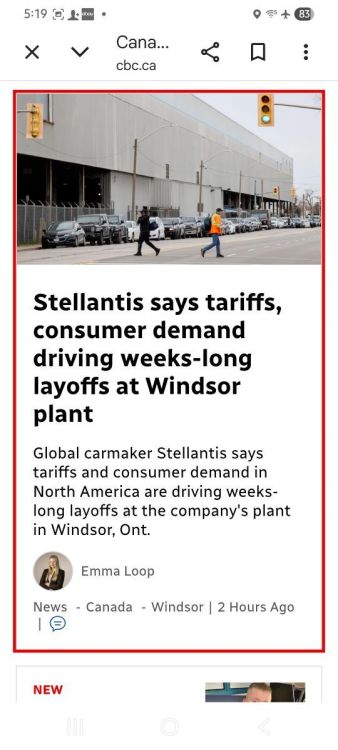
A lot of people work there.They also want to sell the plant.Money says it will close.Cant bring the plant here cause no one here wants to work.Right.We even have a hard time finding dependable hard workers.Even raised the pay.That didn't work.Same in sports.Give them more money and they play hurt and will never earn it.Get worse.Pay me more doesn't mean I will do more.Time's have changed.When labor cost go up,so does the product price.So one one wins.Health insurance goes up too.
-
Now Canada is being rude.We are going to ruin their economy.
-
You already knew this Mike.
-
Major Historical Conflicts and Gripes • Nationalization of U.S. Assets: After Fidel Castro took power in 1959, the Cuban government seized billions of dollars worth of private and corporate property, land, and American-owned oil refineries without compensation. • The Cuban Missile Crisis (1962): Cuba allowed the Soviet Union to secretly install nuclear missiles on the island, bringing the U.S. and USSR to the brink of nuclear war. • Soviet Alignment and Cold War Proxy Conflicts: Following the revolution, Cuba allied closely with the Soviet bloc and deployed troops to back Marxist movements and insurgencies in Africa and Latin America (such as Angola and Central America). • Espionage and Subversion: U.S. intelligence agencies have repeatedly accused Cuban intelligence of spying, conducting espionage operations, and trying to influence political dissent or gather information inside the United States. • Human Rights and Domestic Repression: The authoritarian single-party rule of the Communist regime—marked by the jailing of political dissidents, suppression of free speech, and forced exoduses like the Mariel boatlift—has long drawn sharp political condemnation from Washington. • The "Havana Syndrome" Incidents: In the 2010s and 2020s, mysterious health attacks (dubbed Havana syndrome) affecting U.S. and Canadian diplomatic personnel stationed in Havana strained bilateral ties further. Note: From the Cuban government's perspective, these actions were viewed as measures of national sovereignty and resistance against long-standing U.S. economic and political hegemony in the region, while U.S. policies have conversely imposed a decades-long trade embargo and strict economic sanctions that Havana characterizes as aggressive. Painsley Catholic College BACKGROUND: why did Cuba become a problem for the USA? From 1933-1959, a right-wing dictator called Batista ruled Cuba. The Amer • 1933-1959: Batista ruled Cuba; US controlled economy. • 1959: Castro overthrew Batista, seized US assets, allied with USSR; US banned trade (Oct 1960), broke ... YouTube·NTD 3m Cuba's Main Objective Is the Violent Spread of Communism YouTube·Times Of India 9m Cuba Sounds 'WAR ALARM' After UN Fiasco; Washington On Alert Council on Foreign Relations (CFR) U.S. What triggered the U.S.-Cuba fallout? The tumultuous U.S.-Cuba relationship has its roots in the Cold War. In 1959, Fidel Castro and a group of revolutionaries ... Wikipedia Cuba–United States relations - Wikipedia Overview: Cold relations stemming from historic conflict, ideological differences, and a U.S. trade embargo since 1960. History: U.S. acquisition of Cuba in 189... Council on Foreign Relations (CFR) U.S.-Cuba Relations | Council on Foreign Relations Jun 30, 2026 — Growing Antagonism. Castro signs a decree nationalizing American-owned banks in Cuba. Castro nationalizes all foreign assets in Cuba, hikes taxes on U.S. import... BBC Timeline: US-Cuba relations - BBC News Oct 11, 2012 — 1898-1934: US defeated Spain, acquired and occupied Cuba, established independence under the Platt Amendment, then abandoned intervention rights in 1934. 1953-1... U.S. Department of State (.gov) U.S.- Cuba Relations History The United States and Cuba did established interests sections in their respective capitals in September 1977 to facilitate consular relations and provid... YouTube·APT 6:03 How U.S.–Cuba Relations Evolved from Cold War Crisis to ... YouTube·Associated Press 4:41 A timeline of US-Cuba relations over the years University of Colorado Colorado Springs The Troubled History of US Page 6 In May, “Castro ordered certain US-owned refineries in Cuba to refine Soviet crude oil and, on their refusal, expropriated them.” 29 In response, the Uni... Google the United States and the Origins of the Cuban Revolution (Ebook) Argues that modern conflicts between Cuba and the United States stem from a long history of US hegemony and Cuban resistance. This title shows what difficulties... AI responses may include mistakes. Learn more
-
No.We are sending them to Africa if they say it is not safe to go back to their land.Can't send them to Cuba.They can swim back.lol
-
https://youtu.be/w_cYrx1TxMY?is=1HpS9p6qEHtBd308
-
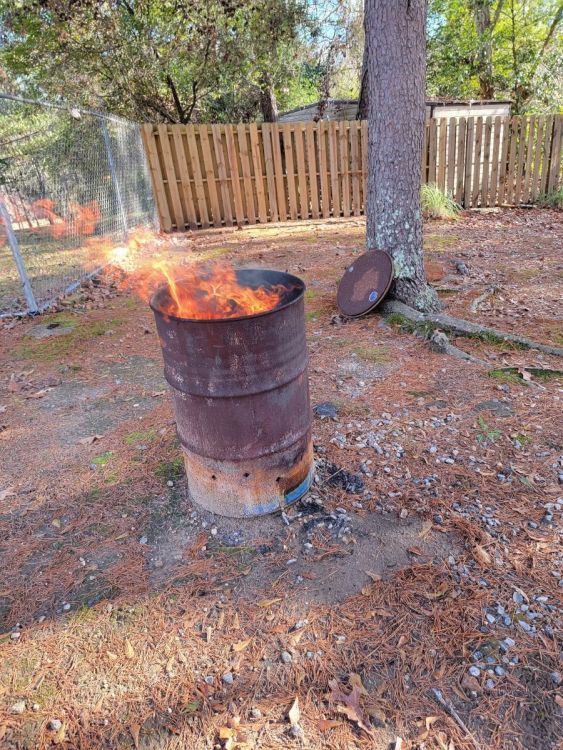
Look Mike.No shots.Burn baby burn.She was sentenced to Death because of what she did.Like that Led Zeppelin Song.Nobodys Fault but mine.No Mike this Forum has a problem with receiving Videos.Must use the Chinese way.But anyway.zIt is hot in that Barrell.Like Hell.
-
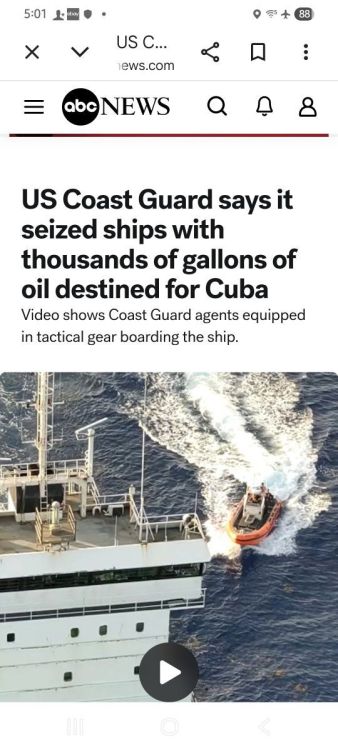
Free oil for us.
-
• The Weapons and Mutilation: They attacked her with a box cutter, carved a pentagram into her chest, and removed a piece of her skull as a trophy. • Aftermath: Pike later showed the piece of Slemmer's skull to other students at the center. She was convicted of first-degree murder andThe Torture and Beating: Once in the woods, Pike and Shipp viciously beat and tortured Slemmer for roughly 30 minutes.The Beating and Torture: Once in the woods, Pike attacked Slemmer, beating and torturing her for roughly 30 minutes while she begged for her life.
-
https://youtu.be/qsnwgaFg4jE?is=Da8s3ljYVyAt8mX5
-
Kill the killer.Make it a painful death.She violated that girls life.Love that song by Nazereth.Expect no mercey.Watch video below Mike.Just for you.
-

Has anyone found replacement bulbs for the AC indicator lamp?
Thomas Perkins replied to matrophy's topic in 720
Just found this on ebay if anyone needs a heating panel light.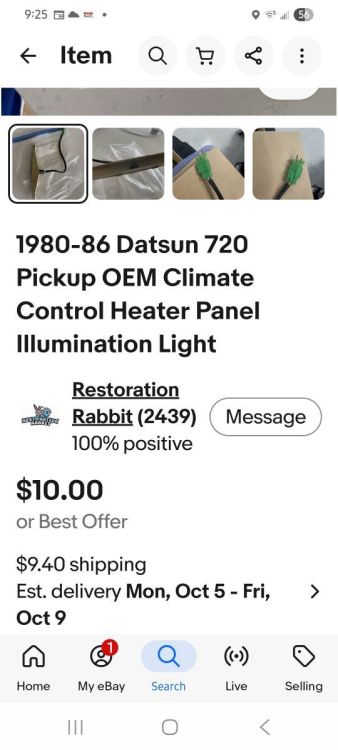
-
Has anyone found replacement bulbs for the AC indicator lamp?
Thomas Perkins replied to matrophy's topic in 720
-
Has anyone found replacement bulbs for the AC indicator lamp?
Thomas Perkins replied to matrophy's topic in 720
Growing in doors is better.Plus better quality.Not grown in dirt. -
Has anyone found replacement bulbs for the AC indicator lamp?
Thomas Perkins replied to matrophy's topic in 720
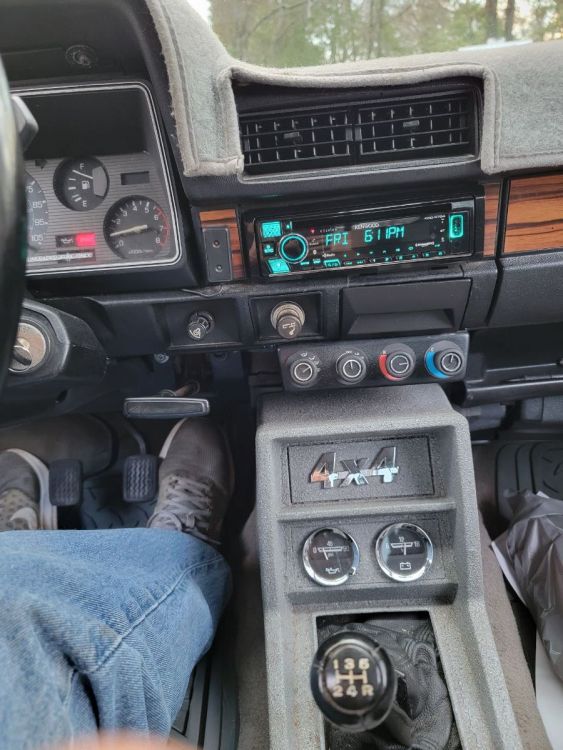
My new Custom made cab control knobs have no light.I am thinking of putting a switch on my dash to turn on the dome light.The kind with a dimmer.My wife's 04 Lincoln LS has a dimmer in her inside light.When the light goes out.It dims out.Why Nissan did not put a inside light switch in the dash.Mine switch works on the dome light.